OPTION 01
Classroom
Understand the conditions.
Explore winter preparation, equipment, changing conditions and the hazards that shape winter driving decisions.

Advance Driver Safety · Seasonal driver development
Build confidence grounded in understanding and practice.
Three ways to prepare your drivers for winter: classroom learning, closed-course practical training, and on-road coaching with assessment.
Prepare for a different driving environment
Winter driving brings preparation, judgment and vehicle handling into sharp focus. Drivers need to understand the environment they are entering and the equipment they are relying on.
Our training connects those foundations to practical learning. Depending on the option selected, participants explore winter concepts, experience vehicle response in a closed training area or apply their approach during an on-road assessment.
The aim is confidence supported by awareness, practice and respect for the conditions.
Choose the training approach
Discuss a single option or a combination based on your drivers, vehicles and working environment.
OPTION 01
Understand the conditions.
Explore winter preparation, equipment, changing conditions and the hazards that shape winter driving decisions.
OPTION 02
Experience the vehicle’s response.
A day in a closed training area, with practical exercises focused on vehicle systems, skid response and braking on slippery surfaces.
OPTION 03
Apply it to the work.
Coaching and assessment in winter conditions, with routes that reflect the driving environment relevant to the role.
Option 01 · Classroom
Explore the conditions, equipment and unique challenges that come with snow and winter driving. Connect those topics to the situations your employees may encounter.
Certificate of Attendance & Participation
Recognizes participation in the classroom training. It is not an assessment of practical driving competency.
Discuss the challenges of snow, ice and changing surfaces, and how conditions influence preparation and driving decisions.
Explore vehicle readiness, winter equipment and the preparation needed before setting out.
Recognize the visibility, road environment and operational challenges that come with winter driving.
Discuss vehicle stability, traction and drivetrain systems, including the importance of understanding the equipment fitted to the vehicle.
Option 02 · Closed-course practical
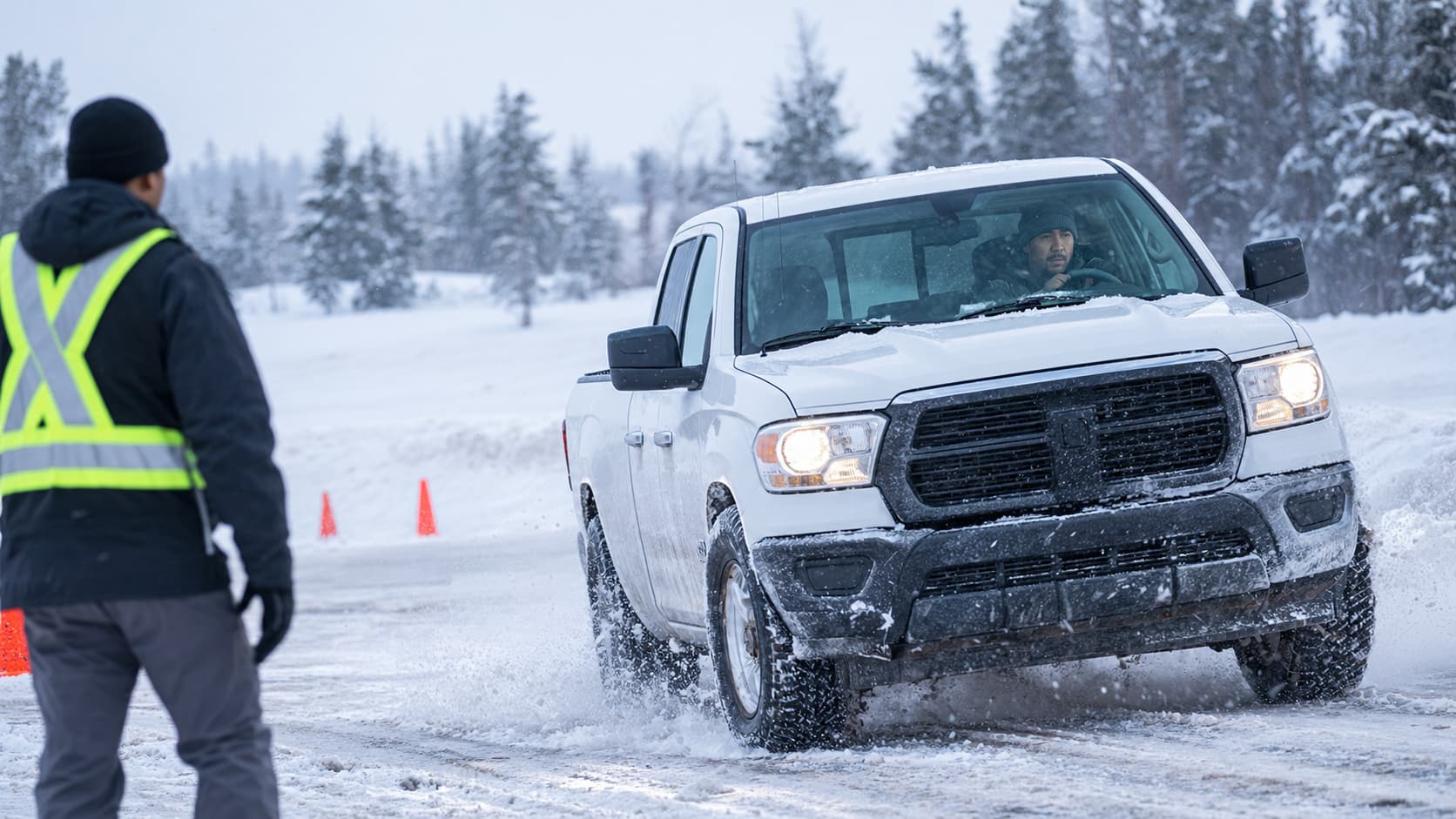
Spend a half-day in a closed training area, navigating practical exercises designed around slippery-surface driving.
Participants explore the vehicle’s response, practise under instructor direction and build familiarity before applying their learning on public roads.
Explore the stability, traction and drivetrain systems fitted to the training vehicle, and how they relate to its behaviour on slippery surfaces.
Practise skid-response exercises under instructor direction in a controlled training environment.
Work on emergency braking, including threshold-braking concepts and the appropriate use of the training vehicle’s braking systems.
Bring awareness, vehicle control and judgment together through a course designed around the available training conditions.
Option 03 · On-road
An on-road winter assessment provides an opportunity to observe the driver’s approach in winter conditions and offer practical coaching.
Where classroom or closed-course training has been completed, the drive gives particular attention to applying that learning.
Routes may include service roads when relevant to the job and suitable for the assessment.
Recognition by training option
Classroom
Recognizes attendance and participation in the classroom training.
Closed-course practical
Reflects the participation and assessment components of the practical training.
On-road
Provided in connection with the on-road winter driving assessment.
Winter training questions
We offer classroom training, closed-course practical training and on-road winter driving assessment with coaching. Contact us to discuss the option or combination that fits your team.
Classroom training explores winter conditions and challenges, equipment, preparation, winter-specific hazards and the concepts behind driving on snow and slippery surfaces.
The closed-course option is a day of practical training in a closed training area. Contact us to confirm scheduling, group arrangements and vehicle requirements.
Yes. The closed-course option includes instructor-directed skid-response exercises in a controlled environment, along with braking and other slippery-surface challenges.
The training considers the stability, traction and drivetrain systems fitted to the vehicle being used. Tell us about your vehicles when booking so we can confirm suitable arrangements.
This option is available only in areas with reliable snow and a suitable closed training area. Delivery depends on appropriate site and surface conditions.
Yes, where service-road driving is relevant to the employee’s role and the route is suitable for the assessment. Discuss the work environment and route requirements when arranging training.
Yes. Classroom training has an attendance and participation certificate. Closed-course practical training has a participation and assessment certificate. The on-road option has an assessment certificate.
The program has three training options. Discuss your drivers, vehicles and learning needs with us so we can recommend an appropriate option or combination and confirm any preparation required.
Plan for your winter driving environment
Tell us where your employees drive, what vehicles they use and which challenges you want to address. We’ll discuss the options, location and training arrangements.