The same concerns keep returning
Recurring incidents, close calls or driving concerns suggest the current response needs a closer look.

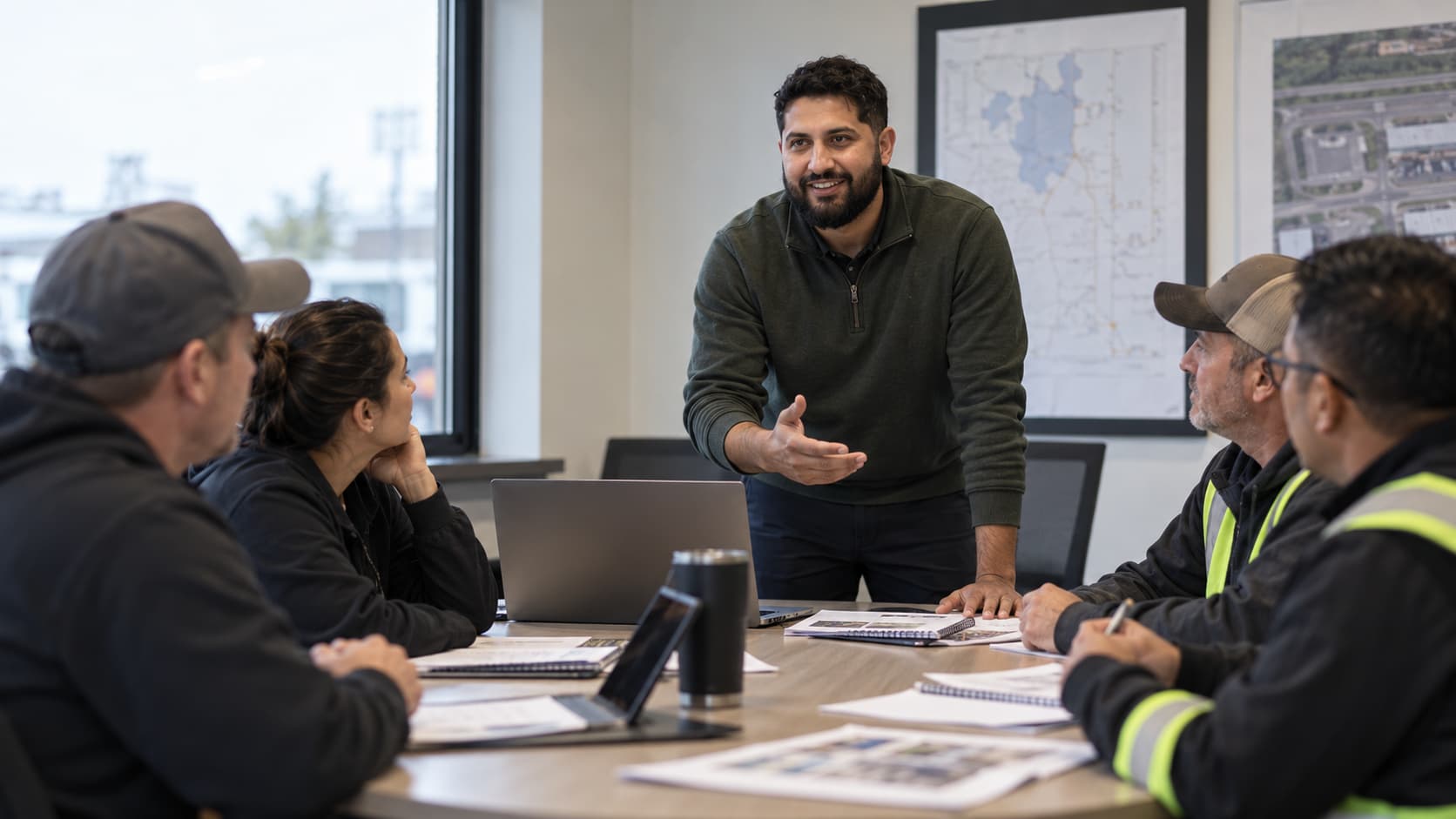
Practical support for fleet safety leaders
Turn a safety concern into a program your team can use.
From discovery and stakeholder input to practical policies, training and assessment systems—we help you move the work forward with a clear purpose and an achievable plan.
Give the project a way forward
Perhaps the same incidents keep appearing. Perhaps expectations differ between locations. Or perhaps you have been asked to develop a program while managing everything else on your desk.
We help you understand the need, define the work and develop a response that fits the operation. Your internal knowledge stays central to the process.
Recurring incidents, close calls or driving concerns suggest the current response needs a closer look.
Supervisors, locations or drivers interpret the same responsibilities differently.
Employees complete a course, but its connection to their vehicles, routes and daily decisions is unclear.
You can see the need for improvement, but need practical support to define, develop and introduce the solution.
Begin with discovery
Useful recommendations begin with the right questions. We look at the agreed areas of your operation and consider how expectations, equipment, people and processes work together.
Who drives, what they operate, how they are prepared and what the job asks of them.
Available incident information, reported concerns and patterns that may help identify priorities.
What the documents say, how expectations are communicated and what happens in the operation.
How drivers are onboarded, coached, assessed and supported when development needs arise.
Who owns the process, who makes decisions and how concerns move from identification to action.
What success needs to look like, what resources are available and what the organization can realistically implement.
From concern to practical action
Development begins with a shared understanding of the need and an agreed direction. Stakeholder input helps shape the work before time is spent building it.
External examples can help reveal opportunities. Recommendations still need to fit your vehicles, resources and operating environment.
Understand the operation, the concerns and the outcome you are trying to achieve. Review relevant information and hear from the people involved.
A shared understanding of the problem.
Identify meaningful gaps and recurring issues. Use relevant industry practices as a reference while considering what fits your operation.
A clearer view of what deserves attention first.
Define the recommended work, intended deliverables and implementation considerations. Gather stakeholder feedback before development begins.
A proposal your internal lead can explain and discuss.
Build the agreed policies, training, assessment tools or supporting processes around your people, equipment and real operating challenges.
Practical materials with a clear purpose.
Establish how the work will be introduced, who will own it and how progress can be reviewed. Include rollout or follow-up support where agreed.
A path from completed materials to everyday practice.
Build what the operation needs
Depending on the agreed scope, development can address one specific gap or connect several parts of your fleet safety program.
Clarify expectations, responsibilities and actions in language the people using the documents can understand.
Driver responsibilities, operating procedures and reporting pathways.
Create a consistent introduction to the driving role, company expectations and vehicle-specific responsibilities.
Onboarding sequences, checklists and development steps.
Build learning around the situations your employees actually face, using examples relevant to their work and equipment.
Training content, practical exercises and supporting resources.
Give the organization a clearer process for observing performance, documenting findings and supporting improvement.
Assessment criteria, observation forms and coaching guides.
Help internal coaches and supervisors work from shared expectations and a consistent process.
Role guidance, delivery structures and feedback tools.
Define ownership and follow-through so the program can be maintained and improved after its introduction.
Rollout plans, review checkpoints and practical measures.
Support the person leading the improvement
Moving a safety project forward takes more than identifying a concern. You need a case for the work, stakeholder support and a realistic way to introduce it.
We help turn your operational knowledge into a defined project, giving you practical support through the agreed development process.
Connect the proposed work to an identifiable operating concern rather than a general request for more training.
Give stakeholders a defined scope, intended deliverables and a practical sequence for moving forward.
Clarify who needs to contribute, who will use the work and who will maintain it.
Agree on useful measures so the organization can look beyond whether a document or course was completed.
Define success before development
The right measures depend on the problem. Agreeing on them early helps the organization evaluate whether the work is being adopted and where further attention is needed.
Consulting and development questions
No. You may know the concern without knowing the right solution. Discovery helps clarify the problem and determine whether the response should involve policy, training, assessment, coaching, process changes or a combination.
Yes. Existing policies, training materials and processes can provide a starting point. The review helps identify what remains useful and where updates or additional support may be needed.
Depending on the project, relevant information may include policies, onboarding materials, training content, assessment forms, incident information and descriptions of current practices. The scope of review is agreed with your organization.
Yes. Development is intended to reflect your people, equipment and the situations your drivers encounter. Those details are part of discovery and inform the agreed work.
The proposal is structured to help your internal lead explain the problem, recommended work and intended deliverables. Discuss any additional presentation or stakeholder support you need when defining the scope.
Relevant industry practices can help inform the review and recommendations. The focus is on understanding what would be useful and appropriate for your operation.
Yes. They can be a starting point. The next questions are whether the content reflects your actual operation, assigns workable responsibilities and gives employees a process they can follow.
Implementation planning, rollout support and review arrangements can be included in the agreed project scope. These should be discussed alongside development so the work has a clear path into use.
Success should be agreed around the problem being addressed. Measures might include clearer responsibilities, consistent onboarding or assessments, completion of development actions, and review of relevant incident patterns over time.
Start with the problem you want to solve
Tell us what is happening, what you have already tried and what you want to improve. We’ll discuss how discovery and development could support your next step.