Defensive driving knowledge
Do they understand the foundations?
Explore the knowledge behind the driver’s decisions and how they understand the principles of defensive driving.

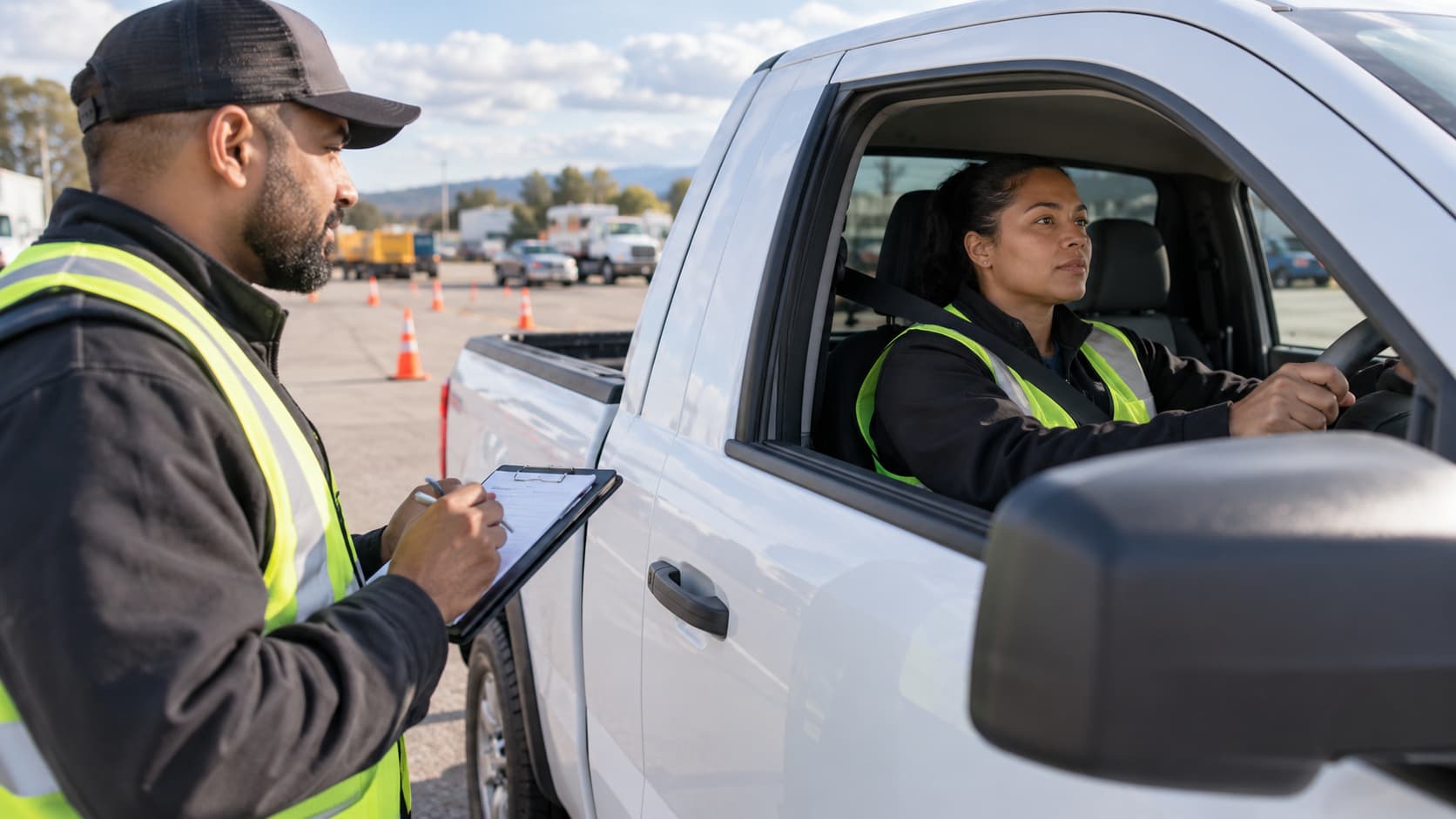
Advance Driver Safety · Workplace driving
Know what your driver does well. Understand what needs attention.
A fair, structured assessment with an opportunity for coaching before evaluation—giving your driver room to improve and your organization clearer information for its next decision.
Understand the person behind the wheel
A licence and years of experience provide part of the picture. Your organization also needs to understand how an employee applies their knowledge, handles the vehicle and responds to the demands of driving for work.
Drawing on provincial examiner and driver-training experience, Advance Driver Safety brings a structured approach to observing performance and identifying development needs.
What we look for
We look at what the driver understands, what they demonstrate and where focused attention could strengthen their driving.
Do they understand the foundations?
Explore the knowledge behind the driver’s decisions and how they understand the principles of defensive driving.
Can they put the system into action?
Consider how the driver applies Defensive Mindset, Risk Management, Insight and Awareness, Vehicle Handling, and Environmental Adaptation.
What does their driving demonstrate?
Observe how the driver manages everyday situations, responds to developing conditions and demonstrates safe, defensive driving behaviours.
What might they no longer notice?
Identify routines or behaviours that deserve attention, including habits that may have become comfortable through repetition.
Where would a refresh help?
Explore whether the driver’s approach reflects the practices taught in the assessment and where updated guidance could strengthen their performance.
How do they handle the vehicle being assessed?
Observe familiarity, control and operation in the agreed vehicle and assessment conditions. Connect the assessment to the equipment the employee is expected to use.
How do they respond to responsibility and feedback?
Consider demonstrated choices, responses to coaching and willingness to uphold safe, professional driving. Keep observations grounded in behaviour.
The assessment process
A fair process gives people clear expectations and a meaningful opportunity to demonstrate their driving.
The vehicle, work responsibilities and purpose of the assessment help define what needs to be observed.
Discuss the employee’s driving responsibilities, the vehicle or equipment involved and the questions your organization needs the assessment to address.
Give the driver a clear understanding of the format and expectations. A consistent approach helps make the experience fair and purposeful.
Provide an opportunity to receive guidance, consider feedback and make adjustments before the assessment.
Evaluate demonstrated driving against the assessment standards, paying attention to both established strengths and areas that need development.
Explain the findings so the driver and organization can understand what was demonstrated and where further attention is recommended.
Understand the findings
The findings should help your organization understand the driver’s demonstrated performance and decide where support, development or follow-up is needed.
Recognize demonstrated strengths and the behaviours worth maintaining.
Understand the specific habits, knowledge gaps or operating concerns identified during the assessment.
Understand the adjustments observed and whether concerns remained after the opportunity to improve.
Use the findings to guide coaching, further development or follow-up assessment where appropriate.
Confirm the assessment scope and reporting format when booking so the findings address the questions your organization needs answered.
Support your safety goals
Preventable incidents affect people, vehicles, schedules and reputation. Understanding driving behaviour helps your organization identify concerns and respond with more focused support.
Driver assessments can contribute to a broader effort to reduce preventable incidents, manage collision-related costs and strengthen accountability around workplace driving.
Their immediate value is practical: a clearer understanding of demonstrated performance and a better basis for development decisions.
A short coaching intervention will not resolve every concern. Some drivers need additional practice, targeted instruction or another assessment before the organization is comfortable assigning particular driving responsibilities.
Identifying that need is a useful outcome. It gives the driver a clearer development direction and helps the organization address concerns with purpose.
Assessment questions
Driver assessments are booked as a full-day service, with up to three participants assessed during the day.
The service helps your organization understand driving performance and development needs. Drivers receive an opportunity for coaching before assessment, and the findings explain what they demonstrate and what needs further attention.
Yes. Coaching before assessment is part of our approach. It gives the driver an opportunity to understand the guidance and make adjustments before being assessed.
Some drivers need more than a brief coaching intervention. Where concerns remain, the findings help identify further development needs and appropriate follow-up.
Vehicle operation is part of the assessment conversation. Contact us with the vehicle or equipment type and intended work so we can confirm suitability, scope and arrangements before booking.
The focus is on observable behaviour: decisions during the drive, responses to guidance and the way the driver approaches professional responsibilities. Findings distinguish observed actions from assumptions about personality.
The results clarify demonstrated strengths, areas needing attention and recommended next steps. Discuss the reporting format and information your organization needs when arranging the assessment.
No. Assessments support your efforts to identify risk and target driver development, but they do not guarantee future driving performance, fewer collisions or insurance savings.
No. Assessing a person’s operation of a vehicle is different from completing a mechanical inspection. Vehicle maintenance and inspection requirements remain separate.
Start with the question you need answered
Book a full assessment day for up to three participants. Tell us about their roles, the vehicle or equipment involved and any concerns you want to explore. We’ll discuss an assessment scope that fits the task.